

Category Archives: Uncategorized

5 Signs Your Water Heater Is About to Fail

Most homeowners don’t think about their water heater until something goes wrong. It sits in a closet, a garage, or a utility room doing its job quietly — until the morning you step into a cold shower or walk into a flooded garage.

The good news is that water heaters almost always give warning signs before they fail completely. If you know what to look for, you can replace the unit on your own terms instead of dealing with an emergency — and the water damage that often comes with it.

Here are the five most common signs that your water heater is reaching the end of its life.
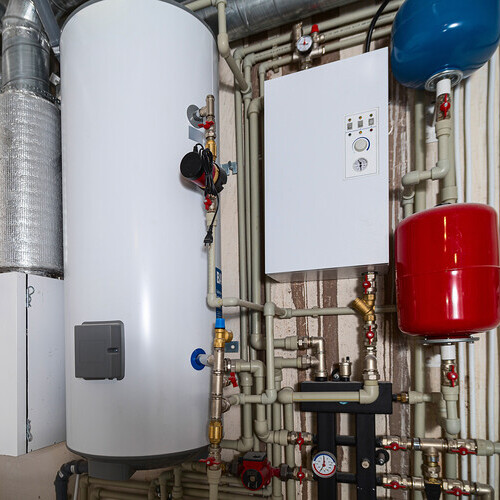
water heaters

1. Your Water Heater Is Over 10 Years Old

This is the simplest indicator, and it’s the one most people overlook. A standard tank water heater has a functional lifespan of about 8 to 12 years. After that, the internal components — the anode rod, the heating elements, the tank lining — start to degrade, and the risk of a leak or complete failure goes up significantly.

If you’re not sure how old your unit is, check the manufacturer’s label on the side. The serial number usually contains the manufacturing date, though the format varies by brand. If you can’t figure it out, you can snap a quick photo of the label and our team can decode it for you in under a minute.

Once a tank water heater passes the 10-year mark, it’s not a question of whether it will fail — it’s a question of when. That doesn’t mean it’s going to burst tomorrow, but it does mean you should start planning rather than waiting to be surprised.

2. Rust-Colored Water

If the hot water coming out of your faucets has a rusty or brownish tint, that’s a strong signal that the inside of your water heater tank is corroding. The anode rod — a sacrificial metal rod inside the tank designed to attract corrosion and protect the tank walls — has likely been consumed, and now the tank itself is rusting from the inside out.

One quick test: check if the rust is only appearing when you turn on the hot water. If the cold water runs clear but the hot water comes out brown, the issue is almost certainly your water heater tank corroding internally. If both hot and cold are discolored, it’s more likely a pipe issue. Either way, once a tank starts rusting internally, there’s no repair — the unit needs to be replaced.

3. Water Pooling Around the Base

Any water around the base of your water heater deserves immediate attention. Sometimes it’s minor — a loose fitting or a valve drip that can be tightened. But often, especially in older units, it’s a sign that the tank itself has developed a small crack or fracture from years of heating and cooling cycles.

These small leaks tend to get worse, not better. What starts as a puddle can become a significant leak, and depending on where your water heater is located, that can mean serious water damage to flooring, drywall, or stored belongings.

If you see water pooling, don’t ignore it. Even if it seems minor, it’s worth having someone look at it before it becomes an emergency.

4. Strange Noises — Popping, Rumbling, or Banging

A water heater that’s starting to make noise is telling you something. Those popping or rumbling sounds are usually caused by sediment buildup at the bottom of the tank. Over time, minerals in the water settle and harden on the tank floor.

Beyond being annoying, sediment buildup makes your water heater work harder than it needs to, which drives up your energy bills and accelerates wear on the tank. When the system tries to heat the water, bubbles get trapped under that heavy layer of hardened scale. As they break through, it creates the distinct knocking, popping, or rumbling sounds you’re hearing.

5. Inconsistent or Declining Hot Water

If your showers are getting shorter because the hot water runs out faster than it used to, or if the water never quite gets as hot as it should, your water heater is struggling. This can be caused by a failing heating element, a malfunctioning thermostat, or simply a tank that’s lost capacity due to sediment buildup taking up space inside.

Occasional fluctuations aren’t necessarily a cause for alarm. But if you’re consistently noticing that your hot water isn’t what it used to be — less hot, less volume, or slower to recover — that’s a pattern worth paying attention to.
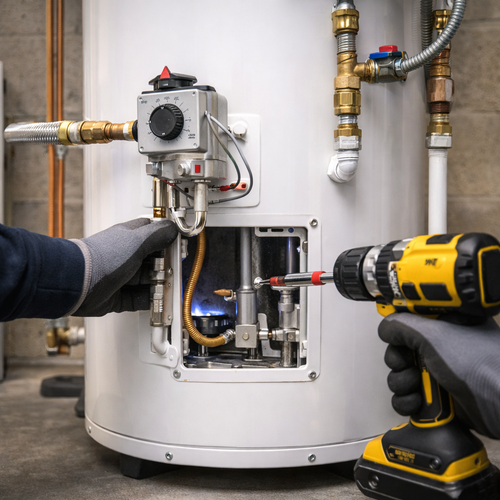
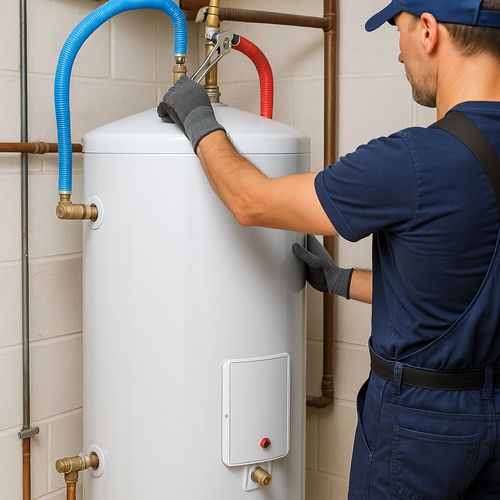
Should You Replace Your Water Heater Before Selling Your Home in Florida?

You’ve got your home listed — or you’re about to — and the last thing you want is a surprise that delays your closing. In the Florida Panhandle, one of the most common last-minute issues that trips up home sales is the water heater.

It’s not dramatic. It doesn’t make for good TV. But an aging water heater can stall a deal, give buyers negotiating leverage, or create inspection headaches that cost you time and money at the worst possible moment.

Why Water Heaters Become a Problem During Home Sales

When a buyer makes an offer on your home, a few things happen that put your water heater under a microscope.

First, the buyer’s home inspector will evaluate every major system in the house — and they’ll document the age and condition of your water heater. If the unit is over 10 to 12 years old, that almost always shows up in the inspection report as a concern. If it’s showing signs of corrosion, has evidence of past leaking, or is installed improperly, it gets flagged even harder.

Second, the buyer’s insurance company may require a four-point inspection before they’ll issue a homeowner’s policy. In Florida, this is common for any home 20 years or older. If your water heater doesn’t meet the insurer’s underwriting standards — typically meaning it’s too old or showing signs of wear — the buyer can’t get insured. And if the buyer can’t get insured, the sale stalls.

Third, the buyer’s lender may also have requirements. Most mortgage companies won’t close on a home that can’t be insured, which brings everything back to that water heater sitting in your garage or utility closet.

What Buyers Do With This Information

In most cases, when a water heater gets flagged during an inspection, the buyer doesn’t just ignore it. They have a few options, and none of them are great for you as the seller.

They can request that you replace the water heater before closing — which means you’re now doing a replacement on their timeline, not yours. They can ask for a price reduction to cover the cost of replacement — which comes directly off your proceeds. Or they can walk away from the deal entirely if the inspection reveals too many issues.

The water heater alone probably won’t kill a deal. But combined with other inspection findings, it can tip the scales. And even if the buyer stays in the deal, the negotiation around a flagged water heater almost always costs the seller more than replacing it proactively would have.

The Math Usually Favors Replacing Early

Here’s how most sellers in the Florida Panhandle think about it once they see the numbers. If your water heater is 10 or more years old and you’re planning to sell, replacing it before listing gives you a few advantages.

You control the timeline. You pick the installer, the unit, and the schedule — not the buyer.

You remove a negotiation point. A brand-new water heater on the inspection report takes away one of the buyer’s easiest asks. That’s one less concession you’re making at the closing table.

You reduce the risk of a deal falling through. If the buyer’s insurer requires a four-point inspection and your old water heater gets flagged, you could be looking at a delayed closing while you scramble to get it replaced. A new unit eliminates that risk entirely.

And in some cases, you can mention it in the listing. “New water heater” might not sound exciting, but to a buyer in Florida who knows about insurance requirements, it signals a home that’s been taken care of. It removes a worry they didn’t even know they had yet.

When It Makes Sense to Wait

Not every situation calls for preemptive replacement. If your water heater is under 8 years old, in good condition, and installed properly, it’s probably fine. Buyers and inspectors generally aren’t concerned about newer units.

It’s also worth knowing that tankless water heaters play by different rules. Because they don’t store large volumes of pressurized water, insurance underwriters typically give tankless systems a pass for up to 20 years. If your home has a tankless unit in good condition, the urgency around replacement is much lower. The 10-to-12-year concern applies primarily to traditional tank water heaters.

But if you’ve got a tank unit in that 10-to-15-year range — especially if it’s showing any signs of age like rust around the fittings, water stains near the base, inconsistent hot water, or higher energy bills — it’s worth having a conversation with a plumber before you list.

One Detail Sellers Often Miss: The Drain Pan

Even if your water heater is relatively new, inspectors in Florida look closely at the installation. One of the most common flags — and one that catches sellers off guard — is a missing or improperly installed drain pan. In Florida, the water heater needs a drain pan underneath it with a discharge pipe routed to the exterior of the home. A missing pan can hold up a four-point inspection even on a brand-new unit.

If you’re not sure whether your water heater has a drain pan, it’s an easy thing to check before you list. And if it doesn’t, it’s a quick fix that prevents a much bigger headache during the inspection.

Selling in the Florida Panhandle?

One thing worth knowing about our area specifically: in coastal zones like Pensacola, Destin, and Panama City, the salty air and hard groundwater can accelerate internal tank corrosion faster than in inland areas. That means the 10-year mark isn’t just an arbitrary insurance number — it’s a real physical limit for many tank water heaters along the Panhandle. Units that might last 12 to 14 years in other parts of the country may be showing serious wear by year 10 here.

If you’re getting ready to sell your home anywhere from Pensacola to Panama City and you’re not sure where your water heater stands, we can help you figure it out. Our team works with homeowners and sellers in this situation all the time — we’ll let you know whether it makes sense to replace now or whether your current unit will hold up through the sale.

Can Your Home Insurance Require You to Replace Your Water Heater in Florida?

water heater

If you’re a homeowner in the Florida Panhandle, there’s a good chance your insurance company has opinions about your water heater — and those opinions can directly affect your coverage.

The short answer is yes. While your insurance company can’t technically force you to replace your water heater, they can decline to renew your policy or refuse to issue a new one if your water heater doesn’t meet their underwriting standards. And in Florida’s insurance market, that’s essentially the same thing.

How the Four-Point Inspection Works

In Florida, insurance companies typically require what’s called a four-point inspection for homes that are 20 years old or older. In the current market, some private carriers have pulled that threshold even lower — requiring four-point inspections on homes as young as 15 years old, and in some high-risk coastal zones, even 10 years old. This inspection evaluates four major systems in your home: roofing, electrical, plumbing, and HVAC. Your water heater falls under the plumbing category, and it gets close scrutiny.

During the inspection, the inspector documents the age of your water heater, its current condition, how it’s installed, and whether there are any signs of rust, corrosion, or leaking. They also photograph the temperature-pressure relief (TPR) valve — a safety component that prevents dangerous pressure buildup inside the tank.

Here’s the thing most homeowners don’t realize: the inspector isn’t actually passing or failing your home. They’re documenting what’s there and sending that report to the insurance underwriter. The underwriter is the one who decides whether they’re comfortable with the risk. And if your water heater is old, showing signs of wear, or installed improperly, the underwriter may require replacement before they’ll approve coverage.

What Triggers a Problem

A few common situations lead to insurance issues with water heaters in the Florida Panhandle:

Age alone can be enough. Most tank water heaters have a functional lifespan of 8 to 12 years. Many insurance carriers start raising flags once a unit passes 12 to 15 years, even if it’s still technically working. Citizens Property Insurance, Florida’s insurer of last resort, generally expects water heaters to be under 15 years old.

One thing that catches homeowners off guard: underwriters don’t care if the tank looks brand new or if you only moved into the house five years ago. They go strictly by the manufacture date encoded in the serial number on the unit’s label. If the serial number says it’s 15 years old, it’s 15 years old in the eyes of the insurance company — regardless of how well it’s been maintained.

It’s also worth knowing that this strict age rule applies primarily to traditional tank water heaters. Tankless systems generally get a pass for 20 years or more because they don’t store large volumes of pressurized water. If your home has a tankless unit, the insurance urgency around age is much lower.

Visible rust or corrosion. If the inspector sees rust-colored water, corrosion on fittings, or mineral buildup around the base, that signals a unit that’s nearing the end of its life. Insurers see that as a water damage claim waiting to happen.

Improper installation. A missing or improperly installed TPR valve drain line is a common flag. The drain line needs to be made of rigid material, have no more than four elbows, and terminate within six inches of the floor. If your water heater was installed without following these requirements, it can hold up your coverage.

Evidence of previous leaks. Even if there’s no active leak, water stains or signs of past leaking around the water heater can raise concerns with underwriters. They may assume damage was done and not properly repaired.


It Was a Pleasure Serving You!


×