Once you’ve decided to repipe your home — whether it’s because your insurance company is requiring it, you’re preparing to sell, or your aging pipes are starting to show their age — the next decision is what material to use. For most Florida homeowners, that choice comes down to two options: PEX and copper.
Both are proven, code-compliant materials used in homes across the country. But they have meaningfully different characteristics, and the right choice depends on your home, your budget, and what matters most to you long term.
What PEX actually is
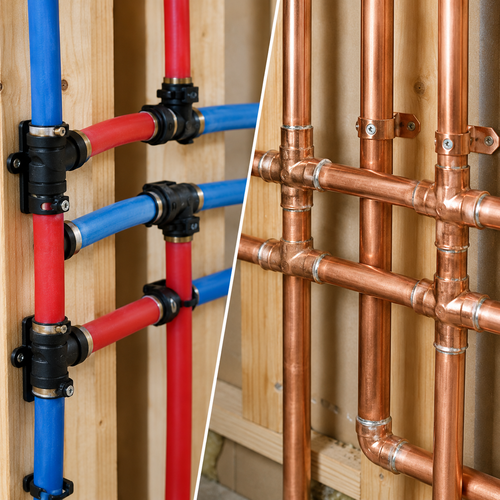
PEX stands for cross-linked polyethylene. It’s a flexible plastic tubing that has become the dominant choice for residential repiping over the past two decades. If you’ve had any plumbing work done on a home built or remodeled in the last fifteen years, there’s a good chance PEX was involved.
PEX comes in three types — PEX-A, PEX-B, and PEX-C — with PEX-A being the most flexible and generally considered the highest quality. The flexibility is a practical advantage during installation because the tubing can bend around corners and obstacles without requiring as many fittings or connections as rigid pipe. Fewer fittings means fewer potential leak points.
In Florida specifically, PEX has several properties that make it well-suited to local conditions. It’s highly resistant to scale buildup from hard water, which is a significant issue across the Panhandle. It doesn’t corrode the way metal pipes do. And it’s resistant to the chlorine and chloramine disinfectants used in municipal water systems — the same chemicals that cause polybutylene to degrade over time.
PEX carries a typical lifespan of forty to fifty years, and the material cost runs roughly forty to sixty percent less than copper. That cost difference often makes PEX the more practical choice, especially for larger homes with more fixtures.
What copper brings to the table
Copper has been used in residential plumbing for over a century and has a well-earned reputation for durability. A properly installed copper system can last fifty years or more, and in some cases, much longer.
Copper is a rigid material, which means installation requires soldering or brazing at every connection point. That makes installation more labor-intensive and time-consuming than PEX, which contributes to the higher overall cost. But copper offers some advantages that matter to certain homeowners.
Copper has natural antimicrobial properties — it inhibits bacterial growth inside the pipe, which some homeowners value for water quality reasons. It’s also the more traditional choice, and in some markets, copper plumbing can add slightly more perceived value to a home sale.
However, copper does have vulnerabilities in Florida. The state’s hard water and acidic groundwater can cause pinhole leaks in copper pipes over time — small holes that develop as the water chemistry slowly eats through the pipe wall. This is a well-documented issue in parts of Florida, particularly in areas with lower pH water.
Copper is also more expensive — both the material itself and the labor to install it. For a typical home, a copper repipe runs roughly forty to sixty percent more than the same job done with PEX.
How they compare on the things that matter
When it comes to cost, PEX is significantly less expensive. Material costs run roughly $0.40 to $2.00 per foot for PEX versus $2.00 to $8.00 per foot for copper. Because PEX is faster to install, labor costs are lower as well. For most Florida homes, the total difference between a PEX repipe and a copper repipe can be several thousand dollars.
For longevity, both materials have strong track records. Copper can potentially outlast PEX in ideal conditions, but Florida’s water chemistry can shorten copper’s lifespan through pinhole leak development. PEX’s resistance to scale and chemical degradation gives it an advantage in the specific conditions found in the Panhandle.
For installation impact, PEX is less disruptive. Its flexibility means fewer wall cuts, fewer fittings, and faster installation — typically two to three days for a standard home versus three to five days for copper. Less disruption to your home means less drywall patching and repainting afterward.
For insurance purposes, both PEX and copper satisfy the requirements that Florida insurance companies impose. Either material will resolve a polybutylene or galvanized steel issue that’s affecting your coverage. There’s no insurance advantage to choosing one over the other.
For home value, copper has a slight edge in perceived value among some buyers, but the practical difference is minimal. What matters most to buyers and their inspectors is that the home has modern, reliable plumbing — not which specific material was used.
What most Florida plumbers recommend
Across the industry, PEX has become the standard recommendation for residential repiping in Florida. The combination of lower cost, faster installation, resistance to Florida’s hard water, and proven long-term performance makes it the practical choice for most homeowners.
Copper still makes sense in specific situations — if you strongly prefer a natural material, if you plan to stay in the home for decades and want the longest possible lifespan, or if your home has specific code requirements that favor copper. But for the majority of Panhandle homeowners making a practical decision about protecting their home and satisfying insurance requirements, PEX delivers the best balance of performance and value.
What to ask your plumber
When you’re getting quotes for a repipe, there are a few questions worth asking regardless of which material you lean toward. What type of PEX do they use — PEX-A, PEX-B, or PEX-C? How many fixtures does the repipe include? Does the quote cover drywall patching and repair? Will they handle the permit and inspection? What warranty do they offer on both materials and labor?
These details vary from company to company, and understanding them upfront helps you compare quotes on an equal basis rather than just looking at the bottom-line number.
At Mechanical Plumbing Systems, we help homeowners across Alabama and the Florida Panhandle understand their repiping options and choose the material that makes the most sense for their home and budget. If you’re considering a repipe and want to know what it would involve, reach out to our team — we’re happy to walk you through it.