
If your home in the Florida Panhandle was built between the late 1970s and the mid-1990s, there’s a reasonable chance your plumbing system includes polybutylene pipes. And if it does, your insurance company probably already knows — or will find out the next time you renew your policy, file a claim, or try to switch carriers.
Polybutylene was once considered a modern, cost-effective alternative to copper. Builders loved it because it was cheap, flexible, and fast to install. During that roughly twenty-year window, an estimated six to ten million homes across the United States were built with polybutylene plumbing. That means about one in five homes from that era has it.
The problem is that polybutylene doesn’t hold up over time. The chlorine and other disinfectants used in municipal water systems slowly degrade the pipe material from the inside out. The pipes become brittle, develop micro-fractures, and eventually crack — often without any visible warning signs on the outside. By the time you see water damage, the failure has already happened behind a wall or under a slab.
Why insurance companies treat polybutylene differently
Insurance carriers in Florida have become increasingly aggressive about polybutylene. The reason is straightforward: homes with these pipes file more water damage claims, and those claims tend to be expensive. A single pipe failure can cause thousands of dollars in damage to drywall, flooring, electrical systems, and personal belongings. In Florida’s humid climate, mold can begin developing within days of a hidden leak.
Here’s what that looks like in practice. Citizens Property Insurance Corporation — Florida’s insurer of last resort for homeowners who can’t find coverage in the private market — will not insure any property with polybutylene plumbing. That’s a flat-out denial, not a rate increase.
Private carriers aren’t much more forgiving. Many will either exclude water damage from your policy entirely, impose significantly higher premiums, or refuse to renew your coverage once they identify polybutylene in your system. Some homeowners in Florida have reported receiving annual premium quotes that actually exceed the cost of a full home repipe.
And it’s getting tighter. As Florida’s insurance market continues to restrict coverage, more carriers are refusing to underwrite homes with polybutylene. This isn’t a trend that’s reversing — it’s accelerating.
How polybutylene gets discovered
Most homeowners don’t know what kind of pipes they have until one of three things happens.
The first is a four-point inspection. If your home is twenty years old or older, most Florida insurance companies require a four-point inspection before issuing or renewing a policy. The inspection covers roofing, electrical, HVAC, and plumbing. If the inspector identifies polybutylene in your plumbing system, that finding goes directly to the underwriter.
The second is a home sale. Buyers and their inspectors have become increasingly savvy about polybutylene. In many Florida markets, a home with polybutylene pipes will sit on the market longer, attract lower offers, or trigger buyer demands for a full repipe before closing.
The third is a leak. By that point, the damage is already done — and you may discover that your insurance policy doesn’t cover the replacement of the pipes themselves, only the resulting water damage, if even that.
How to tell if you have polybutylene
Polybutylene pipes are most commonly gray, though they can also appear white, blue, black, or silver. They’re flexible plastic, usually stamped with the code “PB2110” along the pipe. They’re typically half-inch to one-inch in diameter.
Check the visible plumbing in your home — under sinks, near the water heater, in unfinished areas like a garage or utility closet, and where the main water line enters the house near the meter. If you see gray flexible plastic pipe with threaded or crimped fittings, you likely have polybutylene.
If you’re not sure, a licensed plumber can confirm it in a few minutes during a routine inspection.
What replacement actually involves
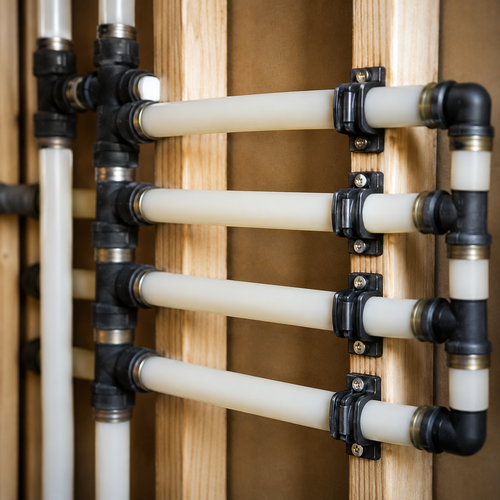
A full polybutylene repipe replaces all the water supply lines in your home with modern materials — typically PEX (cross-linked polyethylene) or copper. PEX is the more common choice in Florida because it’s flexible, resistant to scale buildup from hard water, and significantly more affordable than copper. It also carries a lifespan of forty to fifty years.
A repipe does not usually involve replacing drain, waste, or vent lines — just the pressurized water supply system. For most homes in the Florida Panhandle, the process takes two to five days depending on the size and layout of the home.
The cost for a typical home in North Florida ranges from roughly $4,500 to $15,000, depending on the number of bathrooms, the accessibility of the plumbing, and the material you choose. That’s a significant investment, but it’s often less than one year of inflated insurance premiums — and it eliminates the risk of a catastrophic pipe failure that could cause tens of thousands of dollars in damage.
The bottom line for Panhandle homeowners
If your home was built between the late 1970s and the mid-1990s and you’ve never had the plumbing replaced, checking for polybutylene is worth doing now — before your insurance company forces the issue on their timeline, not yours.
Replacing polybutylene proactively lets you shop for quotes, choose your plumber, and schedule the work at your convenience. Waiting until a policy renewal, a claim denial, or a home sale puts you in a reactive position where you’re paying more and have fewer options.
At Mechanical Plumbing Systems, we help homeowners across Alabama and the Florida Panhandle evaluate their plumbing systems and understand their options. If you’re not sure what you have or what it would take to replace it, talk to our team — we can walk you through it.