
Most homeowners don’t think about their water heater until something goes wrong. It sits in a closet, a garage, or a utility room doing its job quietly — until the morning you step into a cold shower or walk into a flooded garage.
The good news is that water heaters almost always give warning signs before they fail completely. If you know what to look for, you can replace the unit on your own terms instead of dealing with an emergency — and the water damage that often comes with it.
Here are the five most common signs that your water heater is reaching the end of its life.
1. Your Water Heater Is Over 10 Years Old
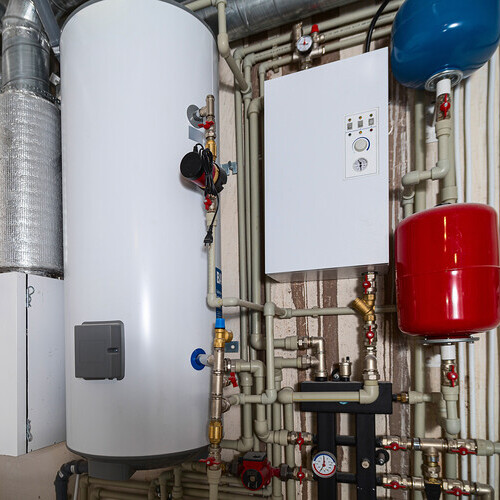
This is the simplest indicator, and it’s the one most people overlook. A standard tank water heater has a functional lifespan of about 8 to 12 years. After that, the internal components — the anode rod, the heating elements, the tank lining — start to degrade, and the risk of a leak or complete failure goes up significantly.
If you’re not sure how old your unit is, check the manufacturer’s label on the side. The serial number usually contains the manufacturing date, though the format varies by brand. If you can’t figure it out, you can snap a quick photo of the label and our team can decode it for you in under a minute.
Once a tank water heater passes the 10-year mark, it’s not a question of whether it will fail — it’s a question of when. That doesn’t mean it’s going to burst tomorrow, but it does mean you should start planning rather than waiting to be surprised.
2. Rust-Colored Water
If the hot water coming out of your faucets has a rusty or brownish tint, that’s a strong signal that the inside of your water heater tank is corroding. The anode rod — a sacrificial metal rod inside the tank designed to attract corrosion and protect the tank walls — has likely been consumed, and now the tank itself is rusting from the inside out.
One quick test: check if the rust is only appearing when you turn on the hot water. If the cold water runs clear but the hot water comes out brown, the issue is almost certainly your water heater tank corroding internally. If both hot and cold are discolored, it’s more likely a pipe issue. Either way, once a tank starts rusting internally, there’s no repair — the unit needs to be replaced.
3. Water Pooling Around the Base
Any water around the base of your water heater deserves immediate attention. Sometimes it’s minor — a loose fitting or a valve drip that can be tightened. But often, especially in older units, it’s a sign that the tank itself has developed a small crack or fracture from years of heating and cooling cycles.
These small leaks tend to get worse, not better. What starts as a puddle can become a significant leak, and depending on where your water heater is located, that can mean serious water damage to flooring, drywall, or stored belongings.
If you see water pooling, don’t ignore it. Even if it seems minor, it’s worth having someone look at it before it becomes an emergency.
4. Strange Noises — Popping, Rumbling, or Banging
A water heater that’s starting to make noise is telling you something. Those popping or rumbling sounds are usually caused by sediment buildup at the bottom of the tank. Over time, minerals in the water settle and harden on the tank floor.
Beyond being annoying, sediment buildup makes your water heater work harder than it needs to, which drives up your energy bills and accelerates wear on the tank. When the system tries to heat the water, bubbles get trapped under that heavy layer of hardened scale. As they break through, it creates the distinct knocking, popping, or rumbling sounds you’re hearing.
5. Inconsistent or Declining Hot Water
If your showers are getting shorter because the hot water runs out faster than it used to, or if the water never quite gets as hot as it should, your water heater is struggling. This can be caused by a failing heating element, a malfunctioning thermostat, or simply a tank that’s lost capacity due to sediment buildup taking up space inside.
Occasional fluctuations aren’t necessarily a cause for alarm. But if you’re consistently noticing that your hot water isn’t what it used to be — less hot, less volume, or slower to recover — that’s a pattern worth paying attention to.