

You’ve got your home listed — or you’re about to — and the last thing you want is a surprise that delays your closing. In the Florida Panhandle, one of the most common last-minute issues that trips up home sales is the water heater.
It’s not dramatic. It doesn’t make for good TV. But an aging water heater can stall a deal, give buyers negotiating leverage, or create inspection headaches that cost you time and money at the worst possible moment.
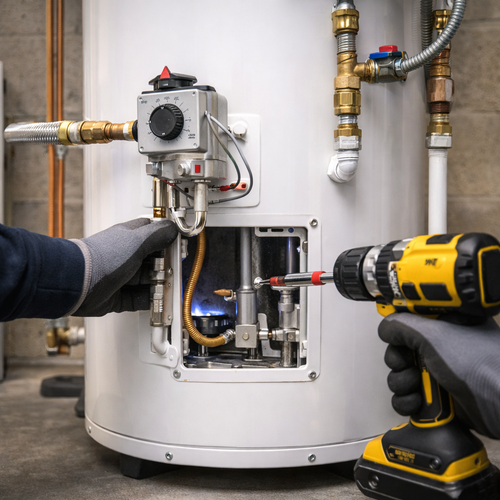
Why Water Heaters Become a Problem During Home Sales
When a buyer makes an offer on your home, a few things happen that put your water heater under a microscope.
First, the buyer’s home inspector will evaluate every major system in the house — and they’ll document the age and condition of your water heater. If the unit is over 10 to 12 years old, that almost always shows up in the inspection report as a concern. If it’s showing signs of corrosion, has evidence of past leaking, or is installed improperly, it gets flagged even harder.
Second, the buyer’s insurance company may require a four-point inspection before they’ll issue a homeowner’s policy. In Florida, this is common for any home 20 years or older. If your water heater doesn’t meet the insurer’s underwriting standards — typically meaning it’s too old or showing signs of wear — the buyer can’t get insured. And if the buyer can’t get insured, the sale stalls.
Third, the buyer’s lender may also have requirements. Most mortgage companies won’t close on a home that can’t be insured, which brings everything back to that water heater sitting in your garage or utility closet.
What Buyers Do With This Information
In most cases, when a water heater gets flagged during an inspection, the buyer doesn’t just ignore it. They have a few options, and none of them are great for you as the seller.
They can request that you replace the water heater before closing — which means you’re now doing a replacement on their timeline, not yours. They can ask for a price reduction to cover the cost of replacement — which comes directly off your proceeds. Or they can walk away from the deal entirely if the inspection reveals too many issues.
The water heater alone probably won’t kill a deal. But combined with other inspection findings, it can tip the scales. And even if the buyer stays in the deal, the negotiation around a flagged water heater almost always costs the seller more than replacing it proactively would have.
The Math Usually Favors Replacing Early
Here’s how most sellers in the Florida Panhandle think about it once they see the numbers. If your water heater is 10 or more years old and you’re planning to sell, replacing it before listing gives you a few advantages.
You control the timeline. You pick the installer, the unit, and the schedule — not the buyer.
You remove a negotiation point. A brand-new water heater on the inspection report takes away one of the buyer’s easiest asks. That’s one less concession you’re making at the closing table.
You reduce the risk of a deal falling through. If the buyer’s insurer requires a four-point inspection and your old water heater gets flagged, you could be looking at a delayed closing while you scramble to get it replaced. A new unit eliminates that risk entirely.
And in some cases, you can mention it in the listing. “New water heater” might not sound exciting, but to a buyer in Florida who knows about insurance requirements, it signals a home that’s been taken care of. It removes a worry they didn’t even know they had yet.
When It Makes Sense to Wait
Not every situation calls for preemptive replacement. If your water heater is under 8 years old, in good condition, and installed properly, it’s probably fine. Buyers and inspectors generally aren’t concerned about newer units.
It’s also worth knowing that tankless water heaters play by different rules. Because they don’t store large volumes of pressurized water, insurance underwriters typically give tankless systems a pass for up to 20 years. If your home has a tankless unit in good condition, the urgency around replacement is much lower. The 10-to-12-year concern applies primarily to traditional tank water heaters.
But if you’ve got a tank unit in that 10-to-15-year range — especially if it’s showing any signs of age like rust around the fittings, water stains near the base, inconsistent hot water, or higher energy bills — it’s worth having a conversation with a plumber before you list.
One Detail Sellers Often Miss: The Drain Pan
Even if your water heater is relatively new, inspectors in Florida look closely at the installation. One of the most common flags — and one that catches sellers off guard — is a missing or improperly installed drain pan. In Florida, the water heater needs a drain pan underneath it with a discharge pipe routed to the exterior of the home. A missing pan can hold up a four-point inspection even on a brand-new unit.
If you’re not sure whether your water heater has a drain pan, it’s an easy thing to check before you list. And if it doesn’t, it’s a quick fix that prevents a much bigger headache during the inspection.
Selling in the Florida Panhandle?
One thing worth knowing about our area specifically: in coastal zones like Pensacola, Destin, and Panama City, the salty air and hard groundwater can accelerate internal tank corrosion faster than in inland areas. That means the 10-year mark isn’t just an arbitrary insurance number — it’s a real physical limit for many tank water heaters along the Panhandle. Units that might last 12 to 14 years in other parts of the country may be showing serious wear by year 10 here.
If you’re getting ready to sell your home anywhere from Pensacola to Panama City and you’re not sure where your water heater stands, we can help you figure it out. Our team works with homeowners and sellers in this situation all the time — we’ll let you know whether it makes sense to replace now or whether your current unit will hold up through the sale.