

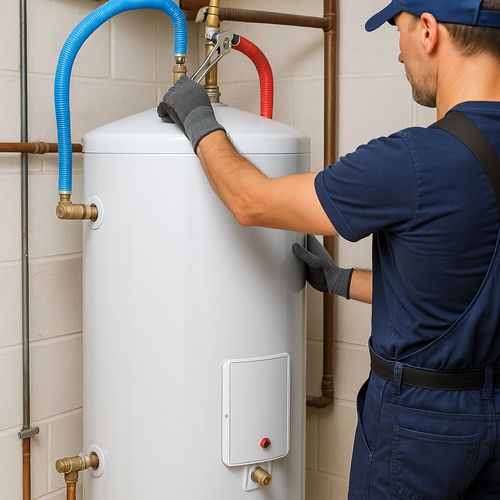
If you’re a homeowner in the Florida Panhandle, there’s a good chance your insurance company has opinions about your water heater — and those opinions can directly affect your coverage.
The short answer is yes. While your insurance company can’t technically force you to replace your water heater, they can decline to renew your policy or refuse to issue a new one if your water heater doesn’t meet their underwriting standards. And in Florida’s insurance market, that’s essentially the same thing.
How the Four-Point Inspection Works
In Florida, insurance companies typically require what’s called a four-point inspection for homes that are 20 years old or older. In the current market, some private carriers have pulled that threshold even lower — requiring four-point inspections on homes as young as 15 years old, and in some high-risk coastal zones, even 10 years old. This inspection evaluates four major systems in your home: roofing, electrical, plumbing, and HVAC. Your water heater falls under the plumbing category, and it gets close scrutiny.
During the inspection, the inspector documents the age of your water heater, its current condition, how it’s installed, and whether there are any signs of rust, corrosion, or leaking. They also photograph the temperature-pressure relief (TPR) valve — a safety component that prevents dangerous pressure buildup inside the tank.
Here’s the thing most homeowners don’t realize: the inspector isn’t actually passing or failing your home. They’re documenting what’s there and sending that report to the insurance underwriter. The underwriter is the one who decides whether they’re comfortable with the risk. And if your water heater is old, showing signs of wear, or installed improperly, the underwriter may require replacement before they’ll approve coverage.
What Triggers a Problem
A few common situations lead to insurance issues with water heaters in the Florida Panhandle:
Age alone can be enough. Most tank water heaters have a functional lifespan of 8 to 12 years. Many insurance carriers start raising flags once a unit passes 12 to 15 years, even if it’s still technically working. Citizens Property Insurance, Florida’s insurer of last resort, generally expects water heaters to be under 15 years old.
One thing that catches homeowners off guard: underwriters don’t care if the tank looks brand new or if you only moved into the house five years ago. They go strictly by the manufacture date encoded in the serial number on the unit’s label. If the serial number says it’s 15 years old, it’s 15 years old in the eyes of the insurance company — regardless of how well it’s been maintained.
It’s also worth knowing that this strict age rule applies primarily to traditional tank water heaters. Tankless systems generally get a pass for 20 years or more because they don’t store large volumes of pressurized water. If your home has a tankless unit, the insurance urgency around age is much lower.
Visible rust or corrosion. If the inspector sees rust-colored water, corrosion on fittings, or mineral buildup around the base, that signals a unit that’s nearing the end of its life. Insurers see that as a water damage claim waiting to happen.
Improper installation. A missing or improperly installed TPR valve drain line is a common flag. The drain line needs to be made of rigid material, have no more than four elbows, and terminate within six inches of the floor. If your water heater was installed without following these requirements, it can hold up your coverage.
Evidence of previous leaks. Even if there’s no active leak, water stains or signs of past leaking around the water heater can raise concerns with underwriters. They may assume damage was done and not properly repaired.